

50 ml Xanthohumol in the Pilot Program 28mg/ml ( 10 colonies)
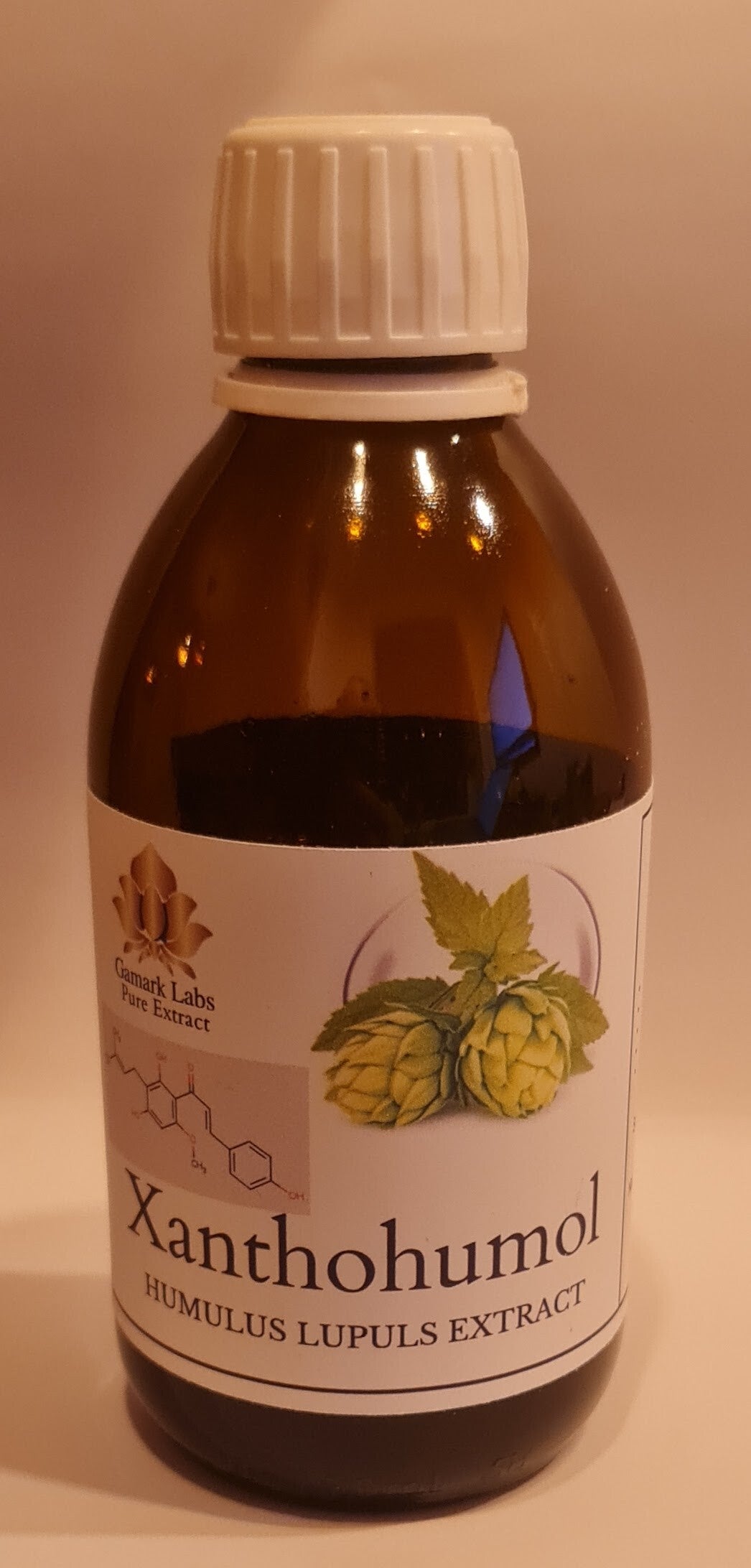
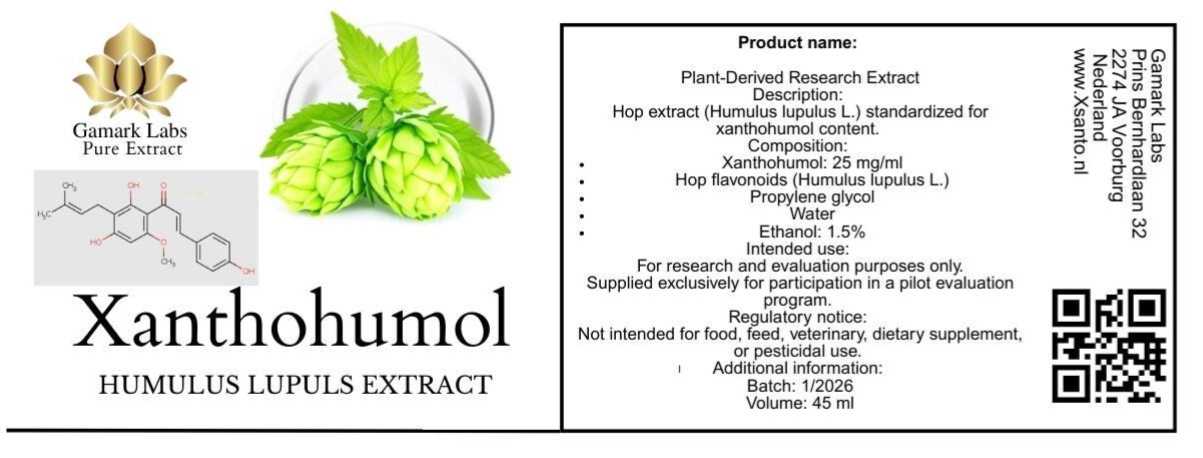

Xanthohumol in the Pilot Program
A plant-derived compound used in scientific research
Xanthohumol is a naturally occurring plant-derived polyphenolic compound found in the cones of hops (Humulus lupulus). For many years, it has been the subject of scientific research due to its chemical properties and its potential role in biological processes related to oxidative balance and cellular metabolism.
Within this project, xanthohumol is used exclusively as a research-grade, evaluation material, intended for assessment under real apiary field conditions.
Why xanthohumol was selected for the pilot program
Contemporary research in the physiology of living organisms—including pollinating insects—has increasingly focused on the role of polyphenolic compounds in the context of:
-
metabolic processes,
-
responses to environmental stress,
-
maintenance of oxidative balance,
-
adaptive capacities of organisms.
Xanthohumol, as a well-characterized plant-derived compound, was selected for the pilot program due to:
-
its known chemical structure and stability,
-
high purity and reproducibility in laboratory-grade extract form,
-
availability of scientific literature supporting the design of evaluation protocols.
Role of xanthohumol in the project
Within the pilot program, xanthohumol:
-
is not treated as a medicinal product, supplement, or protective agent,
-
does not replace treatment or standard beekeeping practices,
-
serves as a nutritional support element evaluated in a controlled manner.
Its use is intended to observe potential effects on overall colony condition and functioning during periods of increased operational load, such as intensive pollination seasons.
The project does not assume or test therapeutic properties.
Material quality and form
The project utilizes xanthohumol that is:
-
of plant origin,
-
laboratory-grade (research-grade),
-
supplied as a standardized extract,
-
with a known and controlled concentration.
This form of material allows for:
-
reduced variability of raw inputs,
-
improved reproducibility of the pilot program,
-
easier comparison of observations across different locations and apiaries.
Research-operational approach
The use of xanthohumol in this project is part of a broader concept that combines:
practical beekeeping operations with a research-oriented approach,
without transferring risk to beekeepers or introducing changes that would be difficult to implement operationally.
Each stage of the project:
-
follows a clearly defined protocol,
-
is based on observation over time,
-
enables verification of whether further scaling is justified.
Transparency and safety
Xanthohumol used in this project:
-
is not offered as a consumer product,
-
is not sold as feed, a dietary supplement, or a veterinary product,
-
is supplied exclusively within the framework of an agreed pilot collaboration.
All activities are conducted in accordance with principles of transparency, regulatory responsibility, and respect for applicable local regulations.
Summary
Within this project, xanthohumol:
-
functions as a research and evaluation tool,
-
forms part of a controlled pilot program,
-
serves to improve understanding of potential approaches to supporting honey bee colony condition under demanding operational conditions.
Any further decisions regarding project development are made exclusively on the basis of data and observations generated during the pilot program.
Application Protocol
Xanthohumol – Pilot Program (Beekeeping)
Important note
This protocol is provided for evaluation purposes only within the Pilot Program.
All decisions regarding application remain the responsibility of the participating apiary.
Material form
-
Plant-derived xanthohumol extract
-
Laboratory-grade (research-grade)
-
Standardized concentration: 28 mg of pure xanthohumol per 1 ml
The extract is intended for feed-level application only and is not applied directly to bees or hives.
Total amount per colony
Recommended pilot dosage:
4.5 ml of extract per colony for the entire evaluation period (approximately 6 weeks).
This corresponds to 126 mg of pure xanthohumol per colony over the full program.
Dose distribution
The total amount is distributed over time, not applied at once.
Recommended schedule:
-
3 applications during the program
-
1.5 ml per colony per application
Total:
3 × 1.5 ml = 4.5 ml per colony
Timing
-
First application: 2–3 weeks before intensive colony activity (e.g. before bloom)
-
Second application: early phase of the pollination or intensive period
-
Third application: during or toward the end of the intensive period
Exact timing may be adjusted by the apiary according to local conditions.
Application method
-
The extract is added collectively to sugar syrup or protein feed
-
Applied according to the apiary’s standard feeding routine
-
No daily dosing required
-
No individual hive-level handling
The protocol is designed to integrate seamlessly into normal beekeeping operations.
Practical examples
-
10 colonies:
15 ml per application → 45 ml total -
50 colonies:
75 ml per application → 225 ml total -
100 colonies:
150 ml per application → 450 ml total
Important considerations
-
Do not increase the dosage
-
Do not apply daily
-
Do not apply directly to bees or hives
-
Do not modify standard beekeeping practices
Summary
4.5 ml of extract (28 mg/ml) per colony, applied in three feedings of 1.5 ml each over approximately 6 weeks, added collectively to standard feed.